
As countries commit to ambitious primary health care reforms, many face challenges translating national vision into practical, actionable plans. Results for Development (R4D) is working alongside governments to help redesign health systems — aligning financing, workforce, and service delivery decisions with real-world constraints (e.g. population needs, institutional capacity, political context). By strengthening system design and planning, R4D is helping leaders build strong, sustainable, high-performing primary health care systems.
The Challenge: Translating Primary Health Care Reform into Action
Across low- and middle-income countries, governments are making bold commitments to strengthen primary health care (PHC) as the foundation for universal health coverage (UHC). These commitments often include expanding benefits, removing user fees, or scaling insurance coverage — reforms that can significantly increase demand for services.
Yet too often, health system planning does not keep pace with political ambition. Planning and budgeting processes remain fragmented, with financing, workforce, infrastructure, and commodity supply chains planned separately and weakly linked to service delivery goals or population needs. National plans may not translate into clear guidance or feasible action at subnational levels, where implementation ultimately occurs.
When reforms outstrip available resources or institutional capacity, countries risk stalled implementation due to weak feedback loops between national and subnational levels, inefficient spending, or loss of political momentum — undermining both trust and impact and limiting accountability for results.
The Opportunity: Rethinking Health System Design and Planning for Stronger PHC
Countries that have successfully strengthened PHC over time often show a different trajectory: they sequence reforms, align short-term operational plans with a longer-term system vision, and use strategic policy levers to get more impact from available resources.
This creates an opportunity to rethink planning itself — not as a one-time technical exercise, but as a dynamic, adaptive governance function that helps countries:
- Prioritize essential PHC services based on population needs
- Align financing, workforce, infrastructure, and commodities decisions around service delivery objectives
- Navigate political economy challenges and effectively manage decentralized governance
- Translate system design visions into incremental operational plans with clear roles and accountability
- Adapt plans in real time while maintaining reform momentum.
With major PHC reforms underway — including insurance expansion, free primary care, and decentralization — countries such as Indonesia, Ghana and Tanzania face a critical window to embed more realistic, evidence-informed approaches to system design and planning that translate reform commitments into feasible implementation.
R4D’s Work: Supporting Governments to Design and Deliver PHC at Scale
R4D, with support from the Gates Foundation, launched Phase 1 of this work with a cross-country analysis of exemplar health systems to understand how system design, planning, and budgeting functions have been carried out to achieve transformational change. The findings showed that countries that made substantial progress toward their PHC goals tended to pursue a common set of realistic system design and planning steps, including:
- Setting a shared vision for PHC
- Designing and prioritizing services based on population needs
- Analyzing the resource requirements and service delivery capacity needed to make services available, drawing on a range of data and analysis (e.g. service readiness, workforce mapping, political economy, public financial management/funds flow, and costing and budget impact)
- Using strategic policy levers – such as strategic purchasing, primary care networks, or increased facility autonomy – to make progress within constraints
- Coordinating diverse stakeholders across sectors and levels of government
- Translating plans into phased implementation, with monitoring, feedback loops, and course correction.
This list represents a neatly ordered version of what often unfolds in a messy, non-linear fashion, and in many contexts not all actions are, or can be, adopted. Even so, these broad steps consistently hold across the country cases where substantial progress toward UHC has been made over the past two decades.
In Phase 2, R4D is building on these findings to support implementation and further learning in selected contexts — validating “enabling factors” for realistic system design and planning, developing practical tools and global public goods through collaborative learning approaches, and embedding realistic planning within active country reforms. This includes providing strategic advisory and coaching support to Ghana, Indonesia, and a third country, working alongside government leaders as they embed realistic planning processes within health sector reform efforts and operational planning cycles.
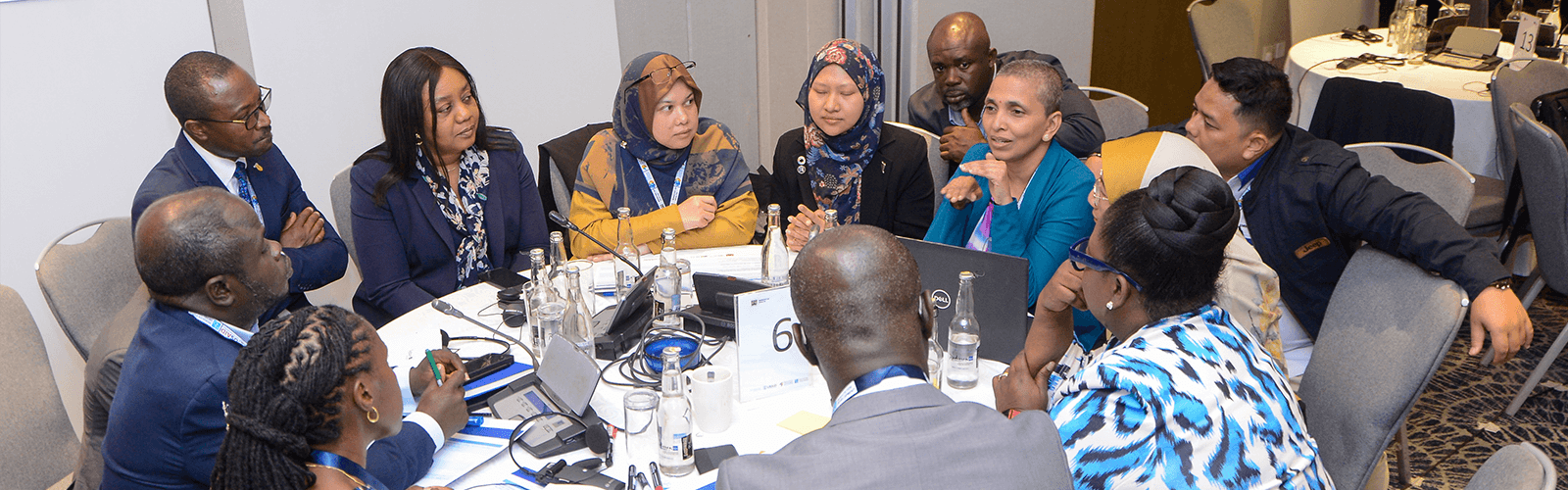
R4D’s facilitation and coaching ensure that key stakeholders are engaged and clearly positioned to carry out their roles, and that they adopt, share, and use a common core set of data and analysis to inform system design and planning decisions. The team supports government stakeholders to apply strategic policy levers in practice, drawing on global examples and advising on national-scale implementation.