
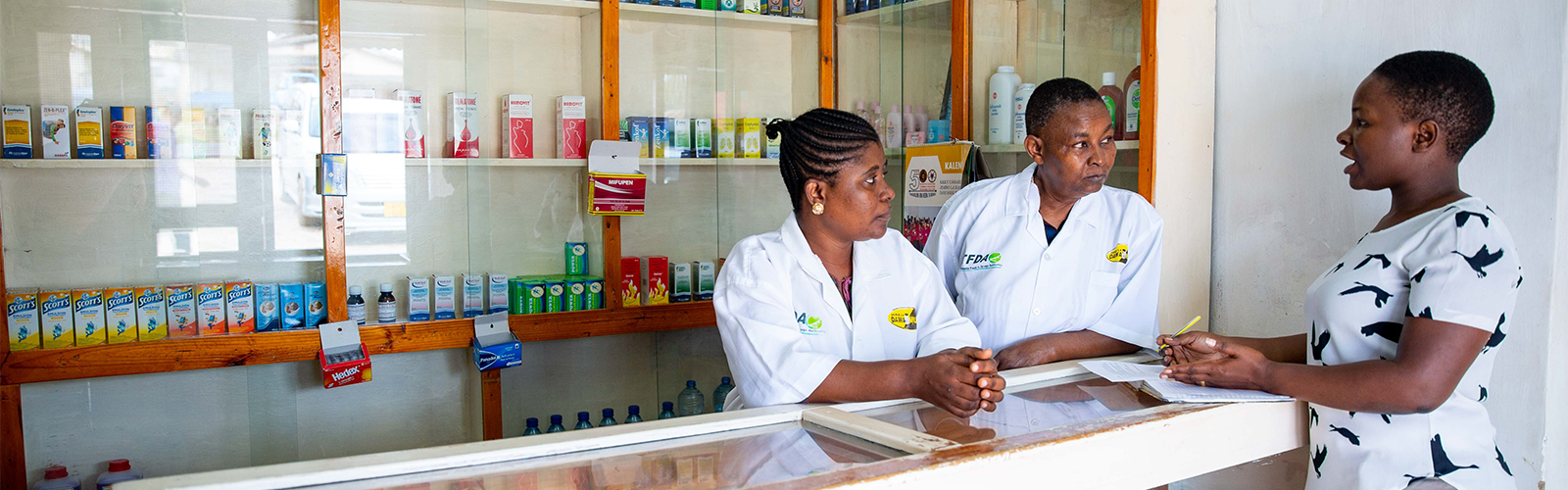
Across many low- and middle-income countries (LMICs), private pharmacies and drug shops are already the first point of care for essential primary health care (PHC) services. Yet despite their reach, convenience and importance to communities, they remain only weakly integrated into formal PHC systems, if at all. Results for Development (R4D) and Endless Health are collaborating to accelerate the mainstreaming of private pharmacies and drug shops into PHC systems — through learning, evidence generation, stakeholder coordination and support for early country experimentation. By building a global platform to facilitate practical country-led learning and implementation, the initiative aims to support countries to transform pharmacies and drug shops from peripheral actors into more effective, connected and accountable contributors to PHC and universal health coverage.
The Challenge: Private Pharmacies and Drug Shops Are Essential but Still Peripheral to PHC Systems
In many LMICs, pharmacies and drug shops are often the most accessible source of affordable essential medicines, counseling, screening and referral — particularly in rural, peri-urban and underserved areas. They already play an important role in facilitating access to family planning, maternal health, non-communicable disease care and other frontline health services. However, these providers remain poorly integrated into PHC systems.
Fragmentation and informality are widespread, with many outlets unlicensed or operating outside regulatory systems and associations. Quality is highly variable, reflecting gaps in training and weak regulatory enforcement. Financing is another constraint: these providers are often excluded from insurance reimbursement and public supply chains, forcing them to rely on product markups that may encourage over-prescription. Their contributions are often invisible because they are not well connected to health information systems. Finally, policy ambiguity and overlapping institutional mandates further limit sustained reform.
As a result, countries are missing a critical opportunity. At a time of constrained public budgets, declining external financing and growing pressure to expand access efficiently, many health systems have not yet leveraged the potential of these providers that communities already rely on. Without clearer policy pathways, stronger regulatory models, better financing arrangements and more structured learning across countries, efforts to engage pharmacies and drug shops risk remaining piecemeal, smaller in scale or disconnected from broader PHC reform agendas.
The Opportunity: A Practical, Country-Led Pathway to Integrate Pharmacies and Drug Shops into PHC
A growing number of countries and innovators are demonstrating that integration is possible. Accreditation and tiered regulatory models, digital aggregation platforms, referral linkages and networked service delivery approaches are beginning to show how private pharmacies and drug shops can become more accountable and better aligned with public health goals. This creates an important opportunity to move beyond isolated pilots toward a more coherent global effort that enables countries to learn from one another and apply workable approaches in their own contexts.
R4D and Endless Health have launched Agora — a multi-year initiative that begins by convening stakeholders, shaping a shared learning agenda and identifying early-adopter countries ready for experimentation. This work builds on an initial phase — a global landscape report that synthesized key barriers, opportunities and emerging models for integrating private pharmacies and drug shops into PHC — and now moves into a second phase focused on developing a global platform to drive coordinated action, learning and country experimentation. We are in the early stages of this platform-building effort, focused on co-creating the platform, establishing a shared learning agenda and convening a structured series of working group sessions to guide early engagement. Over time, this effort can help countries test viable models, strengthen the evidence base and contribute to global norms on how pharmacies and drug shops can support access, quality, efficiency and equity in PHC systems.
With growing momentum from governments, innovators, funders and normative bodies — and growing pressure to identify sustainable, country-owned approaches to service delivery — this is a timely moment to advance pharmacy and drug shop integration as a pragmatic PHC systems strategy.
Read our landscape report on integrating private pharmacies and drug shops into PHC in LMICs here.