
When health services are disrupted, countries need to know quickly and act fast. Together with the World Bank and the Global Financing Facility for Women, Children and Adolescents (GFF), Results for Development (R4D) is helping countries use better data, stronger analysis, and peer learning to protect essential primary health care and improve decisions that affect women, children, and families.
The challenge: When data gaps leave health systems blind
Countries cannot protect essential health services if they cannot see problems early. Across many low- and middle-income countries, primary health care systems face growing pressure from funding shifts, workforce shortages, and other disruptions. But too often, leaders do not have timely, practical data to show where services are changing, who is being affected, or what action is needed.
That matters because breakdowns in primary health care can quickly affect lifesaving services for women, newborns, children, and adolescents. At a time when countries are being asked to do more with limited resources, they need better ways to track changes in service delivery, make sense of what the data shows, and respond before setbacks become crises. Donors and partners also need stronger evidence to support smarter investments and more resilient health systems.
The opportunity: Turning data into action through peer learning
The Global Financing Facility’s (GFF) Frequent Assessments and Systems Tools for Resilience (FASTR) initiative supports countries in monitoring primary health care system performance in ways that are more timely, low-cost, and actionable — enabling rapid course correction and adaptive management. The toolset includes regular analysis of health management information systems (HMIS) data from DHIS-2 and rapid-cycle health facility phone surveys, all processed through an open-source analytics platform with embedded AI designed to accelerate the cycle from data to action. First developed in 2023, FASTR has seen a surge in demand from partner countries seeking innovative approaches to collecting, analyzing, and using more timely data for decision-making.
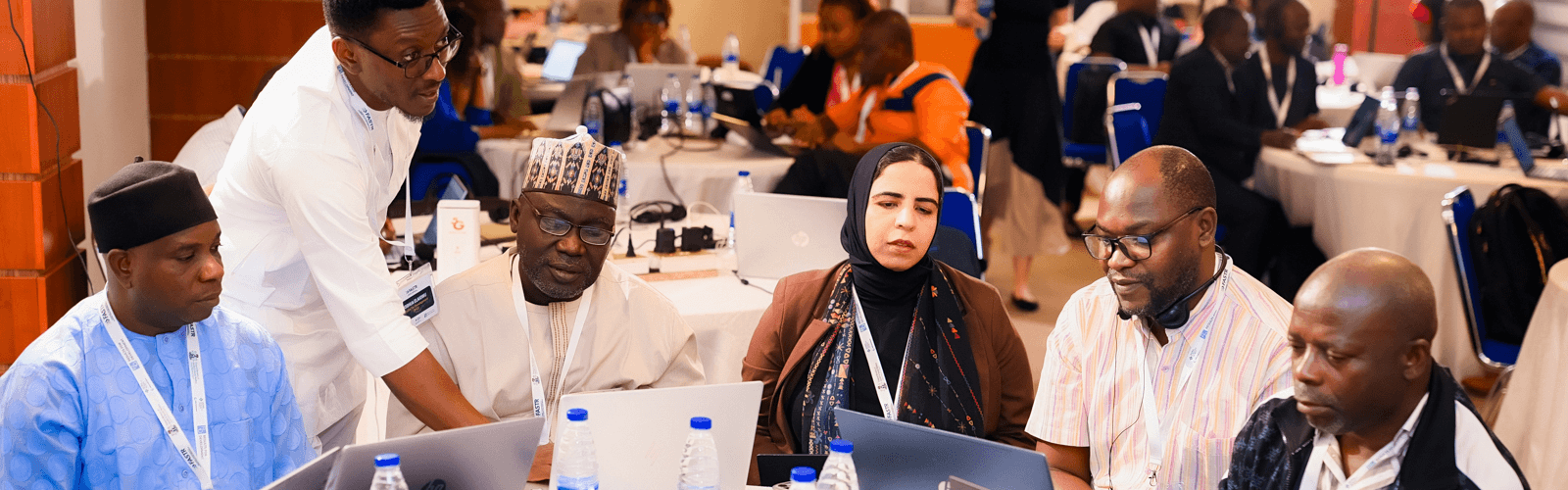
Enter the FASTR Multi-Country Learning Exchange which is enabling FASTR’s rapid scale up across sub-Saharan Africa. Through the learning exchange, participating Ministries of Health from 24 countries are gaining the tools, skills, and support to analyze service delivery data, identify disruptions, and use evidence to guide action in their countries. By bringing together both new and experienced country users — as coaches and mentors, the exchanges also create space for peer learning, shared problem-solving, and stronger country ownership.
Many countries are navigating funding changes and broader health system pressures that can threaten hard-won gains in primary health care. FASTR helps countries respond with better evidence. Over time, this approach can help countries build stronger, more resilient systems that are better able to protect essential services.
R4D’s work: Facilitating peer learning to strengthen health data use in LMICs
R4D is designing and delivering the FASTR Multi-Country Learning Exchanges in partnership with the Global Financing Facility. Through in-person workshops and follow-up virtual peer learning sessions, R4D supports countries to strengthen their ability to routinely generate, analyze and use service delivery and facility readiness data to strengthen primary health care. The goal is to help decision-makers and technical teams identify service disruptions earlier, interpret results in context, and turn analysis into action.
R4D’s role includes helping countries prepare for participation, refine indicators and use cases, review early analyses, and build the skills needed to use the FASTR platform with confidence. The exchanges are designed to do more than transfer technical knowledge: they help country teams develop clear messages, strengthen decision-making, and create action plans for using evidence in national systems. National government representatives from Nigeria, Ghana, Somalia, Ethiopia, Senegal and Guinea — all early FASTR adopter countries — have acted as coaches for newcomers, sharing how their countries have adapted FASTR to their local context and translated data into decisions.
By supporting national and subnational health leaders, monitoring and evaluation staff, and other key users of service delivery data, R4D is helping build the long-term capacity countries need to use evidence more effectively.
This work is part of the GFF’s Frequent Assessments and Systems Tools for Resilience (FASTR) initiative, a rapid-cycle analytics and data use program. To learn more about FASTR, visit the initiative page.