
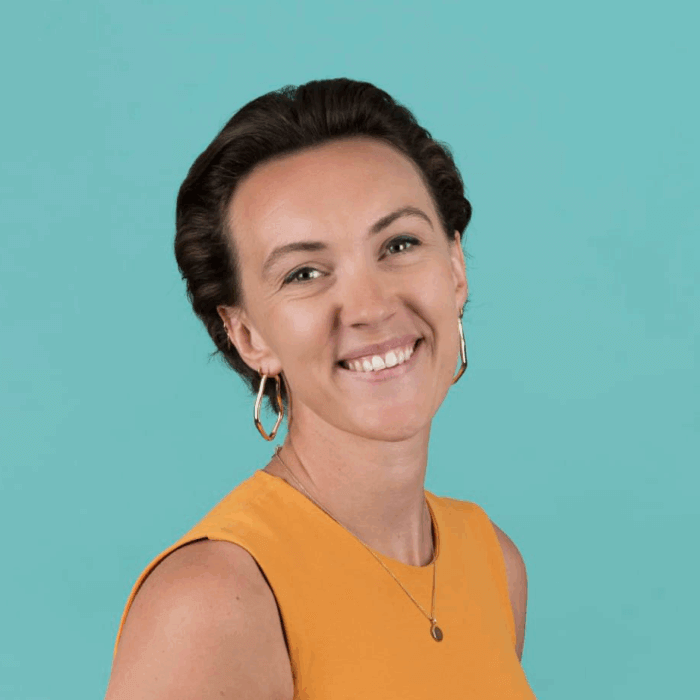
Alethea Osborne is a monitoring, evaluation and learning specialist with extensive experience in gender equity, social development and public health, particularly in sub-Saharan Africa and the Middle East.
Alethea is a senior program manager at Results for Development, where she leads monitoring, evaluation and learning within the Innovation team. She is also a specialist in gender equity, disability and social inclusion (GEDSI), and helps ensure a comprehensive inclusion lens throughout the Innovation team’s work. Collectively, she works to ensure that innovative approaches bring about equitable impact and are measured and learned from in ways that benefit the change agents involved and the wider ecosystems.
She has worked as a researcher, grant manager and technical expert on public health and gender equality, often with a focus on sexual and reproductive health. She has been a thought leader on menstrual health and has provided expert advice to multiple stakeholders — including UNFPA, ActionAid Malawi, Plan International, AmplifyChange and the Aga Khan Foundation — shaping policy and generating direct impact. For example, she recently guided the Aga Khan Foundation in Uganda to pilot and scale a first-of-its-kind menstrual cup project that produced tangible quantitative uptake results as well as rich qualitative insights. Throughout her work, Alethea has focused on bridging the gap between research and implementation, emphasizing how to capture actionable insights that drive tangible changes responding directly to localized problems.
Before joining R4D, she worked as an independent consultant, providing technical advice on monitoring, evaluation and learning to multiple INGOs and international development actors, including UK Aid Match. From 2020 to 2024, she was a senior technical expert in gender and social inclusion at MannionDaniels, serving on the senior management team. Her responsibilities included working directly with donors such as FCDO, the Dutch Ministry of Foreign Affairs, UNFPA and cross-donor partnerships such as the Global Evidence in Education Advisory Panel to ensure quality results and impact measurement within education, health and climate programming.
Alethea holds a master’s degree in public health from the London School of Hygiene and Tropical Medicine, a master’s degree in Middle East studies from the University of Oxford, and a bachelor’s degree from the University of Exeter.