
Translating an ambitious vision into realistic health system progress: Insights from a global convening
Health systems reform is often characterized by sweeping transformation agendas that entail large financing commitments. Political rhetoric is often unrealistic. Operationalizing these visions is highly complex. And raising enough resources to meet ambitious expectations can be difficult. But even more challenging are fragmented governance structures, weak implementation capacity, existing limitations to workforce and health infrastructure, and political disruptions. How can a health system planner — who wants to support realistic progress towards universal health coverage — navigate this landscape?
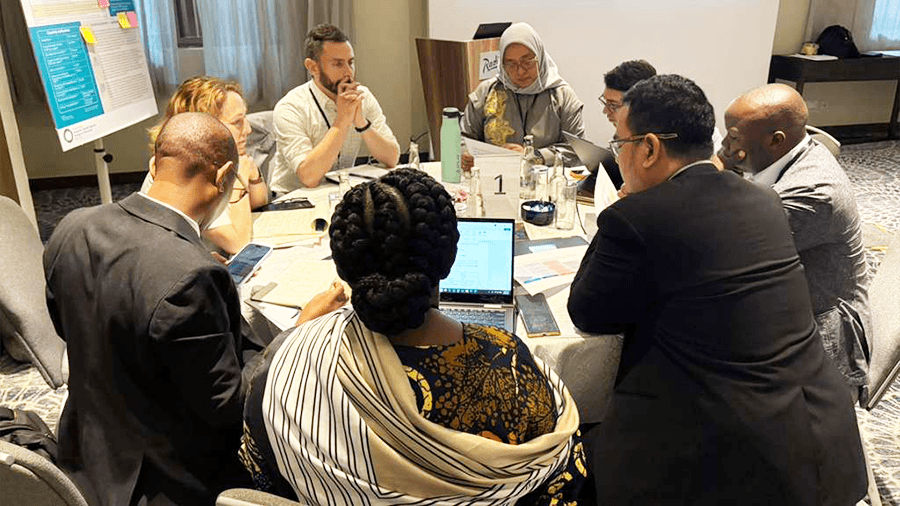
At a recent global convening on realistic health system design and planning, policymakers, researchers, and implementers from countries including Argentina, Bangladesh, Estonia, Ghana, and Nigeria reflected on what it takes to successfully implement reforms under constraints. Their experiences revealed an important lesson. Successful reform is rarely about waiting for perfect conditions or large influxes of funding. Instead, it is about deliberately redesigning incentives, institutions, and implementation strategies to make steady progress despite constraints — strategically prioritizing existing resources while incrementally building toward a long-term vision.
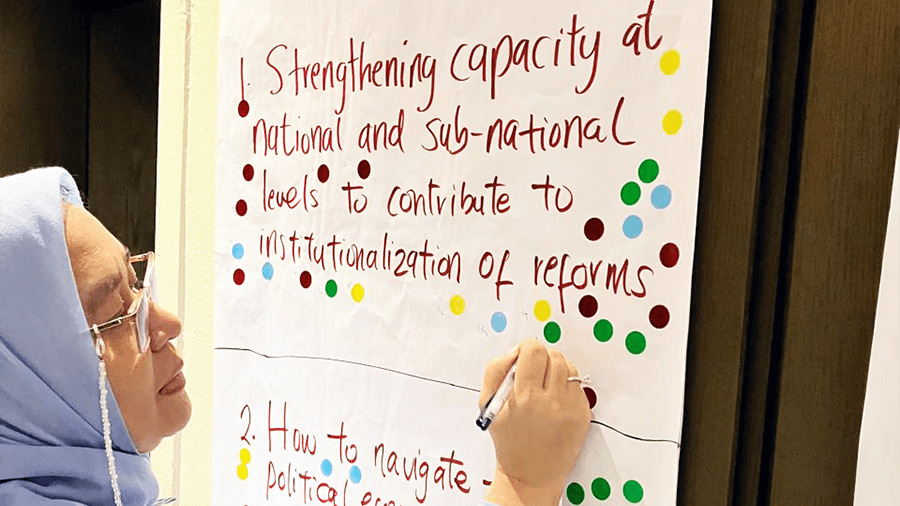
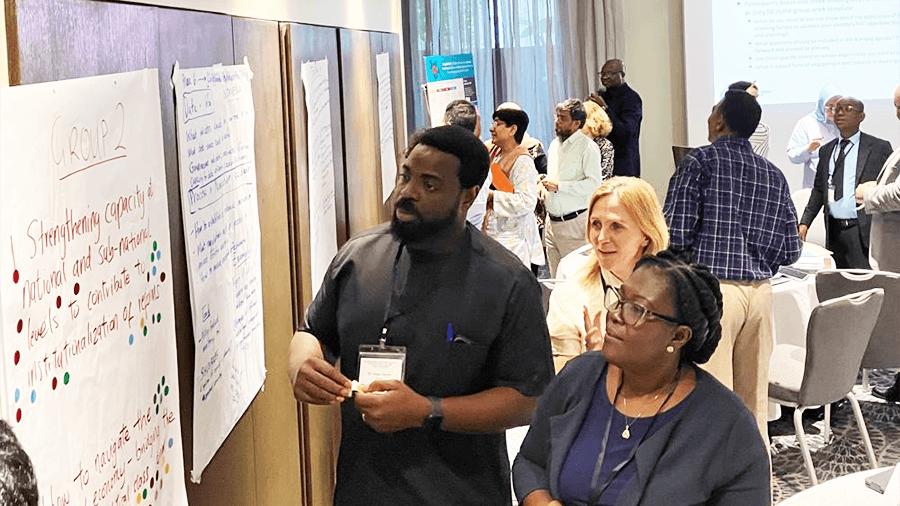

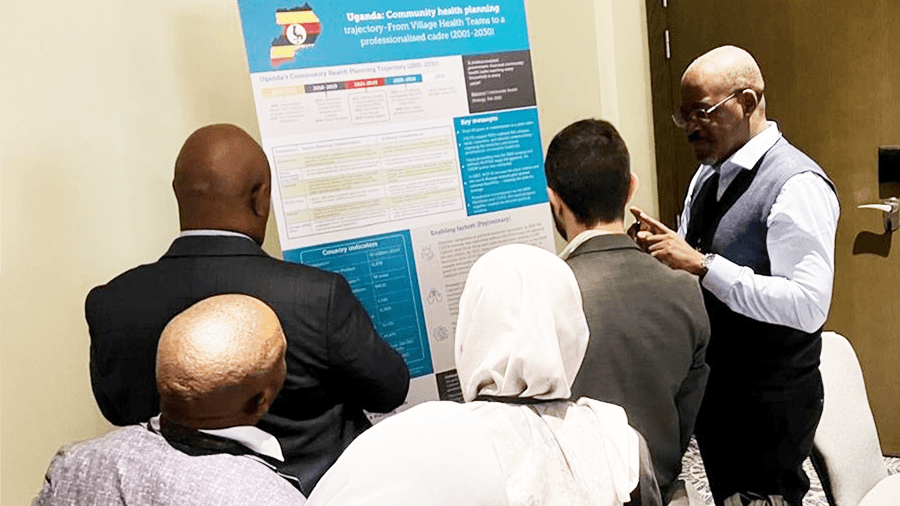
Here are 5 key insights the facilitators heard from the convening.
1. Start with priorities, not perfection
One success factor is starting small, with a targeted, prioritized reform. Rather than attempting sweeping primary health care (PHC) transformation all at once, Nigeria demonstrated the value of prioritizing high-impact interventions that addressed the most critical system bottlenecks. Nigeria’s Basic Healthcare Provision Fund (BHCPF) focused on two things: improving governance and coordination within the health system, and improving the flow of funds to PHC facilities. To do this, Nigeria introduced PHC agencies at federal and state levels with clear coordination mechanisms and set aside 1% of government revenues for PHC. They also allowed funds to flow directly to PHC facilities through the new agencies and the National Health Insurance Authority. Over time, the BHCPF has expanded to include more facilities, and funding has been used by state health insurance agencies to provide access to a defined benefit package to low-income citizens.
Ghana is in the midst of rolling out a “Free PHC” policy that introduces a prioritized package of high-impact, cost-effective preventive and promotive care. The new service package is an incremental expansion, but it lays the groundwork for further benefits expansion in the future as fiscal space opens up.
2. Redesign incentives, even if you can’t add resources
Even without new resources, incremental progress can be made by redesigning incentives and service delivery arrangements. Estonia inherited a hospital-centric health system after its independence from the Soviet Union. Primary care was available, but it was provided by hospitals and often resulted in referrals for more expensive specialized services.
When the country faced a financial crisis in the late 1990s, it deliberately designed primary care reforms — that were budget neutral — but improved quality and access. Capitation was introduced for PHC services, along with gatekeeping for hospital-level care. Existing resources were reorganized as the country shifted from hospital-centered outpatient care toward family medicine practices. University professors and medical specialists recognized the need for change and initiated a family medicine retraining program. They created a new cadre of family physicians and elevated the status of primary care. They worked alongside the Ministry of Health and the health insurance fund to redesign financing and service delivery to strengthen primary care and improve system efficiency. Strengthened coordination across levels of care helped improve health outcomes while using available resources more effectively.
In the case of Argentina’s Programa Sumar, a relatively small amount of funding was strategically used for conditional transfers to provinces. The performance-linked financing — equivalent to approximately 1% of provincial health budgets — created incentives for provinces to align with national priorities (especially for services targeting women and children in disadvantaged regions), strengthen information systems, and improve management capacity. The program expanded over time to include all provinces, and increased access for the uninsured population (now more than 20 million people are covered). The program resulted in an increase in service utilization and reduction in neonatal mortality.
3. Build institutions that outlast political cycles
Bangladesh’s experience shows how quickly momentum for reform can change depending on political context. For much of the past decade, Bangladesh’s health sector planning processes have retrogressed. However, prior to that, Bangladesh had invested in health policy and systems research institutions, technical human resource expertise at the Ministry of Health and universities, and a strong digital architecture and supporting infrastructure.
Following major political changes in 2025, and a new government in 2026, health reform re-emerged as a national priority. The new administration signaled strong commitment to strengthening primary health care, using digital tools, and expanding the health workforce. Fortunately, the previous investments created a foundation to act quickly once political momentum returned and reform opportunities emerged. This raised an important insight for reformers about how even during periods when reform momentum slows, investments in technical capacity, data systems, and institutional learning continue to matter. Political opportunities may open unexpectedly and countries that are prepared with evidence, systems, and institutional capacity are often best positioned to capitalize on them.
4. Invest in managerial and implementation capacity
Argentina’s approach also demonstrated how realistic health system reform means matching ambition with implementation capacity. From the outset, Argentina’s health system managers recognized that one of the country’s main challenges was limited managerial capacity at provincial and facility level. To address this, Programa Sumar created national and provincial management units and provided technical support and supervision to strengthen capacity. Performance agreements tied to financial incentives were used to align provinces to national priorities and improve provincial management capacity. Flexible funds at the provider level also expanded implementation capacity, allowing providers to address local priorities while gradually building a culture of performance and accountability at the provincial level. Argentina’s experience shows that implementation capacity is an integral part of the reform design. Bangladesh’s experience demonstrated the importance of investing in data and digital systems as foundational elements for long-term reform. These investments became particularly valuable during their period of political transition, when new reform opportunities emerged and the government sought to advance a more ambitious primary health care agenda.
5. Engage coalitions within and beyond the health sector
A fifth reflection emerged emphatically from multiple countries at the convening. Successful health systems design and planning in the face of serious resource constraints requires building coalitions with an ecosystem of political and technical stakeholders – including political leaders, technocrats, clinicians, researchers, communities, and non-health sector actors.
In Estonia, close cooperation between clinical experts, the Ministry of Health, and the health insurance fund was essential to the primary care transformation. Reform advanced because stakeholders listened to each other, negotiated compromises, and aligned around common values. Nigeria similarly highlighted the importance of legislative support, community engagement, and partnerships with development partners. Reforms required political backing, technical assistance, and visible results to sustain momentum. In Nigeria’s Jigawa State, improvements in immunization coverage over several years provided evidence that reforms were working and helped strengthen political support for continued investment.
Looking beyond the health sector, aligning reforms with the priorities of finance ministries and other sectors helped strengthen support for PHC investments in Bangladesh and Nigeria. Collaboration with finance, agriculture, and digital technology sectors helped gain political buy-in. Health sector leaders often frame issues in technical or sector-specific terms, while ministries of finance focus on fiscal sustainability, economic development, efficiency, and economic returns. Reform efforts become more successful when health leaders can connect their goals to broader government priorities.
In conclusion: Successful reform is ultimately about building systems that can adapt
One of the most powerful reflections was that sustainable reform depends on building systems that can survive political change, financial shocks, and evolving challenges. This means not only identifying a compelling vision and technically sound policy, but investing in managerial capacity, institutional coordination, and developing a learning culture to keep adapting and improving based on the implementation experience.
Reform is not a linear process. Political windows open and close. Funding expands and contracts. But when systems are designed strategically — grounded in context, with aligned incentives, and supported by strong institutions, and continuously refined through learning — countries can continue moving steadily toward long-term goals.