
Mainstreaming private pharmacies and drug shops into primary health care — why now?
In towns and villages across Africa and Asia, when a child falls sick or a mother needs family planning advice, the first stop is rarely a health facility (whether public or private). It’s the drug shop around the corner — open early, open late, run by someone the community knows and trusts.
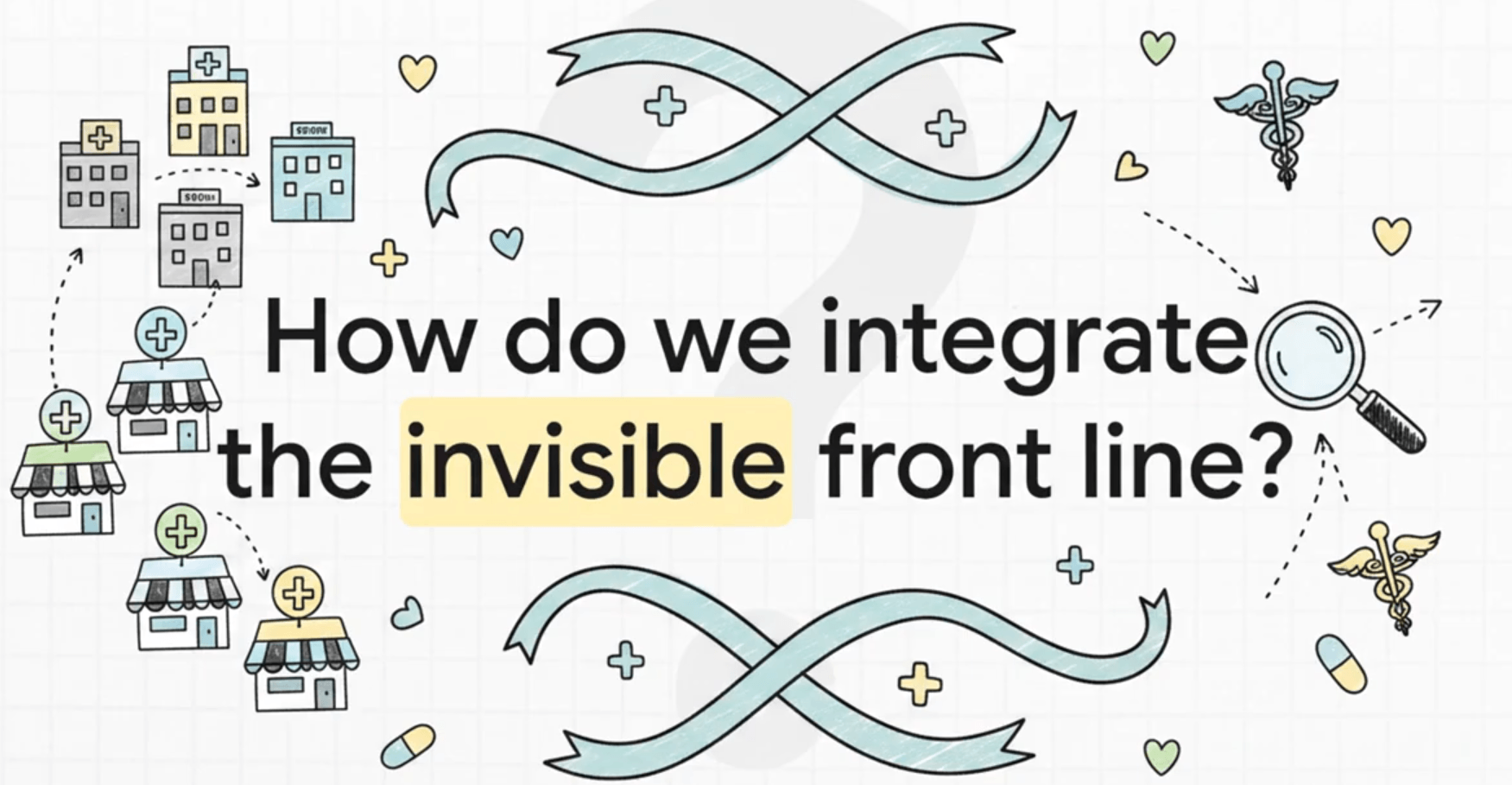
In many low- and middle-income countries, private pharmacies and drug shops are where most people actually get care — not as a stopgap, but as the de facto system. These private pharmacies and drug shops are the quiet backbone of primary health care in low- and middle-income countries (LMICs). Yet despite seeing millions of patients every day, they remain almost entirely invisible to the formal health systems around them — excluded from national policies, financing mechanisms, data systems, and oversight structures.
But with donor funding declining, and the question looming of how to achieve universal health coverage with domestic resources alone — engaging with the private sector is becoming a stronger priority for many health leaders. This is especially important for sustaining improved health outcomes among marginalized and hard-to-reach populations. At the same time, primary health care has gained prominence as an integrated platform for service delivery, especially at the last mile.
This is an opportune moment to elevate discussions about the role of private pharmacies and drug shops — beyond the traditional promotion of private-sector engagement — emphasizing the role that they already play in health care delivery and the need for their formal integration into primary health care systems. The question however remains: what would it take to make this happen?
A landscape report led by Results for Development in partnership with Endless Health highlights the persistent challenges to this integration and the health system levers that can be used to catalyze progress and build momentum to take integration to scale.
Watch: Bringing pharmacies into PHC
Six reasons private pharmacies and drug shops aren’t part of the mainstream health system yet
The report identifies six interconnected challenges that have kept drug vendors on the margins of primary health care. Providers are highly fragmented — thousands of independently owned shops with no collective platform for engagement. Quality varies enormously, and regulatory enforcement is weak, especially in rural and peri-urban areas. Because these private vendors operate on retail margins, their incentives push toward selling products rather than promoting health outcomes.
Beyond that, they are structurally disconnected — no referral pathways, no reporting systems, no links to community health workers or public health facilities. Their patients aren’t tracked. Their contributions aren’t counted. And in many countries, there is no clear policy framework that even acknowledges they exist as part of the health system.
What are the levers to mainstream private pharmacies and drug shops into health systems
The report doesn’t stop at diagnosis. It maps out six strategic levers that governments and their partners can activate to bring drug vendors into the fold.
- Provider aggregation — building digital or physical networks that connect fragmented vendors into a common platform — is the foundation. Without it, everything else is nearly impossible to do at scale.
- Quality assurance creates minimum standards and stepwise pathways for improvement.
- Financing and incentives align vendor income with public health goals by linking shops to insurance schemes and performance-based payments.
- Data and reporting systems — even basic ones — make these providers visible and accountable.
- Supervision and referral connections embed them in the broader care continuum.
- Policy and regulatory reform give the whole system a legal foundation.
Early examples of integration and opportunities for action
Innovation is already happening. In Kenya, platforms like Maisha Meds are enabling real-time reporting and remote supervision of private pharmacies. In Nigeria, a tiered model for patent medicine vendors — backed by the Pharmacy Council and partners including the Gates Foundation — has reshaped national task-shifting policy. In Indonesia, franchise pharmacy chains demonstrate how structured private networks can deliver quality-assured primary care at scale.
Financing reform, however, remains the universal weak spot. Across every country studied, inclusion in public payment schemes is either nascent or non-existent.
Countries that are serious about universal health coverage are going to need these providers. The drug shop isn’t another tangential system actor to be managed — it’s an asset waiting to be activated. With the right investments in aggregation, quality, and policy, these frontline vendors can become essential nodes in equitable, people-centered primary health care.
A global learning community for pharmacy and primary health care integration
The question now is how countries can learn from one another and build momentum for change. To support that effort, R4D, in partnership with Endless Health, has launched AGORA, a global learning initiative dedicated to integrating private pharmacies and drug shops into primary health care systems. AGORA brings together governments, regulators, implementers, innovators, researchers, funders, and other stakeholders to exchange lessons and advance practical approaches to integration. The initiative will serve as a platform for peer learning, evidence sharing, and collaboration around some of the most pressing challenges and opportunities identified in this report. Follow AGORA on LinkedIn to join the community, and stay informed about upcoming activities, including the first working session.
Photo credit: Sala Lewis